Free calculator
Emergency Fund Calculator
Find out how much to save for unexpected expenses and when you'll get there. No signup required.
Your numbers
Rent or mortgage, groceries, utilities, insurance, transportation and minimum debt payments.
3 to 6 months is a common starting point. Consider more if your income is uneven or others depend on you.
Leave blank to ignore interest.
Your safety net
Your emergency fund target
6 months of essential expenses
Estimates assume the same deposit every month and no withdrawals.
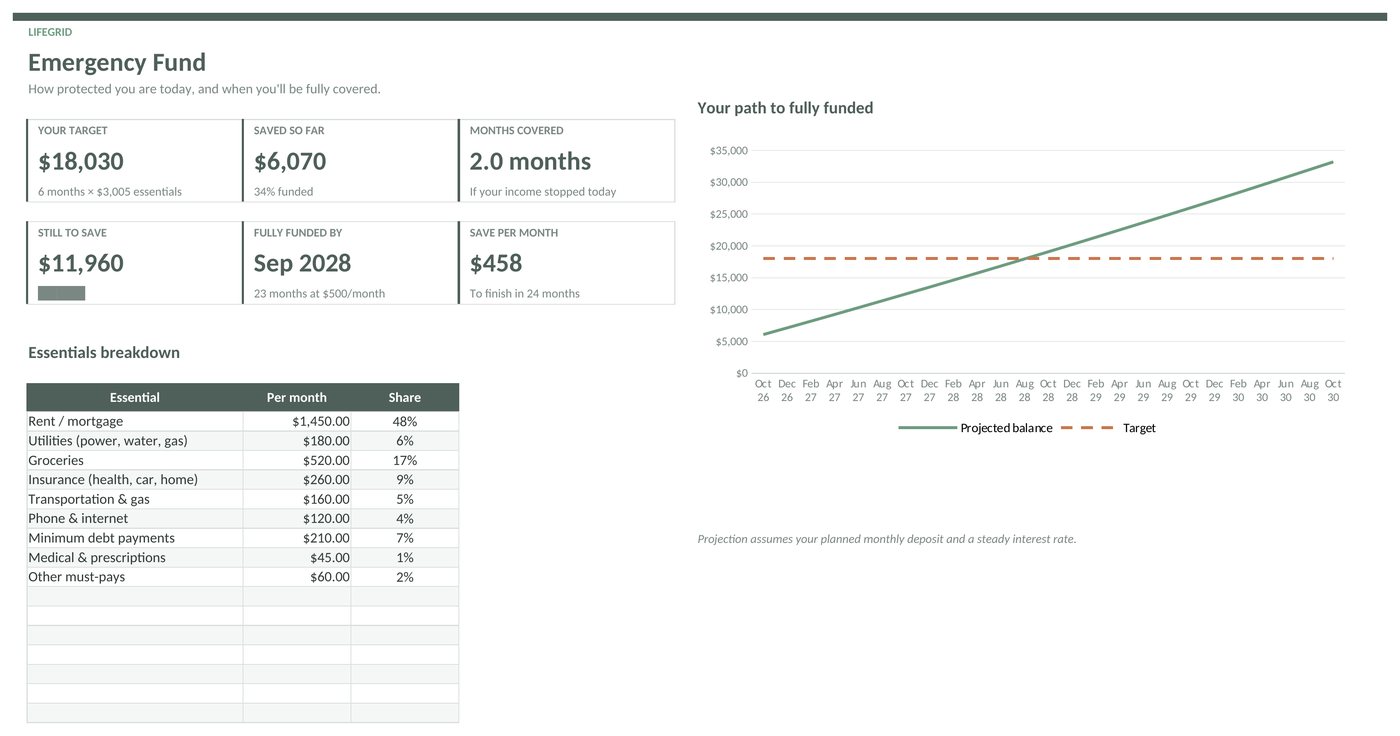
Save to PinterestTrack your $18,000 safety net month by month
Your target is set. The LifeGrid template builds it from your real bills, logs every deposit and shows exactly when you'll be fully funded.
- Target built from up to 16 essential bills
- Deposit log and progress bar
- Fully funded date with interest included
Not ready to buy?
Grab the free Monthly Expense Snapshot and see where your money went this month.
Questions
How much should my emergency fund be?
A common guideline is 3 to 6 months of essential expenses. People with uneven income, a single income or dependents often aim for 6 to 12 months. Your situation may call for a different number.
What counts as an essential expense?
Bills you'd still have to pay if your income stopped: housing, utilities, groceries, insurance, transportation and minimum debt payments. Leave out things you could pause, like dining out or travel.
Where should I keep my emergency fund?
Many people use a high-yield savings account so the money stays easy to reach and earns some interest. Enter its APY above to include interest in the estimate.